

beyonce age |
- 34 things you probably didn't know about Beyoncé - Insider - INSIDER
- Beyonce's Dad Is Teaching A 'Music Master Class' At The University of Houston This Spring - Narcity USA
- Inspired by Beyoncé’s beekeeping? Here are five tips every beginner beekeeper should know - Yahoo Sports
- Guest comment: Is 'Beyoncé Giselle Knowles-Carter' the same person as deferred member 'Beyoncé Knowles'? - Pensions Age
| 34 things you probably didn't know about Beyoncé - Insider - INSIDER Posted: 09 Oct 2020 12:00 AM PDT
Beyoncé Knowles-Carter is one of the most celebrated stars in the world. As Beyoncé's career evolved over the course of three decades, the Texas-born artist has topped the charts with countless hits, such as "Single Ladies (Put a Ring on It)," "Crazy in Love," and "Formation." She's won 24 Grammys, dabbled in acting, producing, and directing, and launched an activewear collection. Yet, despite her A-list status, the singer maintains a famously low profile. Although the Beyhive — her most fervent fans — can likely tell you everything there is to know about the superstar, there are still some facts that aren't quite common knowledge. Here are 34 things you might not know about Beyoncé:  |
| Posted: 06 Nov 2020 10:04 AM PST [unable to retrieve full-text content]Beyonce's Dad Is Teaching A 'Music Master Class' At The University of Houston This Spring Narcity USA  |
| Posted: 06 Nov 2020 03:29 AM PST  Watch: How to start your own beehive at home As the ultimate queen of pop, Beyoncé recently revealed she is queen B in another way – as an amateur beekeeper! In an interview with British Vogue magazine, the singer revealed that she has two hives, home to over 80,000 bees. "I've had them at my house for a while now," she revealed. "I have around 80,000 bees and we make hundreds of jars of honey a year." Read more: 'Crazy' beekeepers determined to make it in tough times While she started beekeeping to help her children's allergies – honey has numerous healing properties – you don't have to be a superstar singer to keep bees. Curtis, also known as The Local Honey Man, knows more than a thing or two about keeping bees. A passion fuelled by his uncle, a master beekeeper, Curtis set up his first apiary in London, proving you don't have to have an A-list mansion with acres of land to keep bees. 1 Get the right equipmentObviously, you need somewhere for your bees to live, so the first important piece of equipment is a beehive, which is basically a series of various boxes. The bottom box will contain your queen bee. She needs to be segregated from the worker bees by using a simple grid splitter, which prevents her getting to the top. Read more: Smart beehive can reduce the labor that goes into harvesting honey by 70 percent The hive also contains frames, with a wax foundation, and this is where the honey is made. Other equipment you may need include a nucleus box and hive tools to help you open the boxes when inspecting the hive. 2 Place your beehive somewhere stableYou can't just plonk your beehive anywhere – you need to ensure it's sitting on level ground. A stand is also good to stop you from bending over too much and also to keep the beehive away from wet ground. Bees are naturally inclined to set up home above the ground, so this encourages that as well. You can buy special beehive stands or just use bricks. 3 Make sure you've got plenty of spaceYou don't need acres of land, just a minimum of a metre and a half around the hive, but it's important to allow space around the hive so the bees can come and go as they please uninterrupted. You also don't need to get permission to keep bees in your back garden or any land that you own, but you do have a responsibility for them not to cause a nuisance. 4 Protect yourselfThe Local Honey Man team recommend going for a full on bee suit as opposed to a jacket and trousers combo, as bees can still get in if you don't tuck yourself in properly! Don't forget gloves either. Nitrile gloves are great – as they are thin enough that you can handle things easily but the bees won't sting you while you're wearing them. Read more: Seven amazing health benefits of honey In this day and age as well, you need to consider protecting yourself against any legal claims from any incidents. It's a good idea to join your local beekeepers' association as this will include insurance liability to protect you if any issues arise. 5 Get good tempered bees!Yes, these really are a thing. With the law requiring you to not to cause a nuisance, well behaved bees are essential! The Local Honey Man provide Buckfast bees as these are not only good tempered, but they also have good productivity and disease resistance. Inspecting the hive or removing the honey can agitate even the most mild-mannered of bees, so a smoker is another piece of equipment you'll need as it helps to calm them down. Watch: Discover what the inside of the beehive looks like and how it works  |
| Posted: 27 Oct 2020 12:00 AM PDT 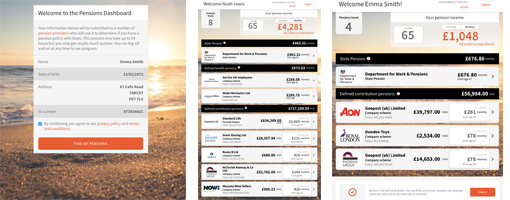 The Pensions Dashboards Programme promises a new era of understanding for members about their overall pension benefits, and of engagement with schemes as members look to turn information into action. But it also introduces a data dilemma for trustees and the administrators they instruct. They will need to reconcile the contrasting demands of two different pieces of legislation: the Pension Schemes Bill currently going through parliament, and the General Data Protection Regulation (GDPR). The first of these will create an obligation on schemes to share member data with third-party dashboards being used by their members. The scope of the data is still being tested by the Pensions Dashboards Programme; but it is clear any data shared with the dashboard – even if it is just an indication the member has benefits with the scheme – will count as personal data. But… the second of these laws – the GDPR – creates an obligation to safeguard personal data, and not to reveal it to third parties that have no right to it. The obligation won't go away at the end of 2020 when the Brexit transition period expires, because the GDPR will be transposed into UK law at that time. So, administrators and trustees will have to walk a very fine line to ensure they meet their new legal obligations to disclose, whilst also meeting their existing obligations not to. At the heart of this tension will be the algorithms that match data about the dashboard user against member data held by schemes. If a match is found, the scheme will return a link to where the dashboard can retrieve information about the member's benefits. If there is no match, then a 'not found' message is returned. That algorithmic matching is both critical and hard to achieve. Matching rules must be defined upfront, with little scope for judgement in their application on a case-by-case basis. Can an algorithm be sure whether the dashboard user 'Beyoncé Giselle Knowles-Carter' is the same person as deferred member 'Beyoncé Knowles,' even if they share a date of birth? Err on the side of a match, and personal data is potentially disclosed to someone other than its subject. But err on the side of no match and, at best, an opportunity is lost to connect a member with accrued benefits; at worst, repeated errors may attract the interest of The Pensions Regulator (TPR). What can be done to improve the chances of not erring on either side? As ever, good quality data will be a prime resource. Dashboard users will have to complete a robust identity verification exercise with their dashboard of choice before submitting a request to find benefits; so schemes can have confidence the matching data they receive does indeed relate to the user in question. And accurate records will give schemes the best chance of accurately matching the request against member data. Indeed, work to improve accuracy needn't wait. Although the Pensions Dashboards Programme has yet to publish its response to industry consultation on data which might be used in matching, most of the elements under consideration – including family name, given name or initials, date of birth, National Insurance number, current address with postcode – are already on TPR's list of common data schemes should record. So, improving the coverage and accuracy of these will yield benefits beyond eventual compliance with dashboard requirements. The Pensions Dashboards Programme and PASA are working with data experts from the industry's leading software providers to establish how request data can best be combined to find as many true matches as possible whilst minimising the risk of finding false ones. But when schemes come to implement matching processes, trustees and administrators will have to work together to find a balance that satisfies both TPR and the Information Commissioner. Share Story:  |
| You are subscribed to email updates from "beyonce age" - Google News. To stop receiving these emails, you may unsubscribe now. | Email delivery powered by Google |
| Google, 1600 Amphitheatre Parkway, Mountain View, CA 94043, United States | |


0 Yorumlar